

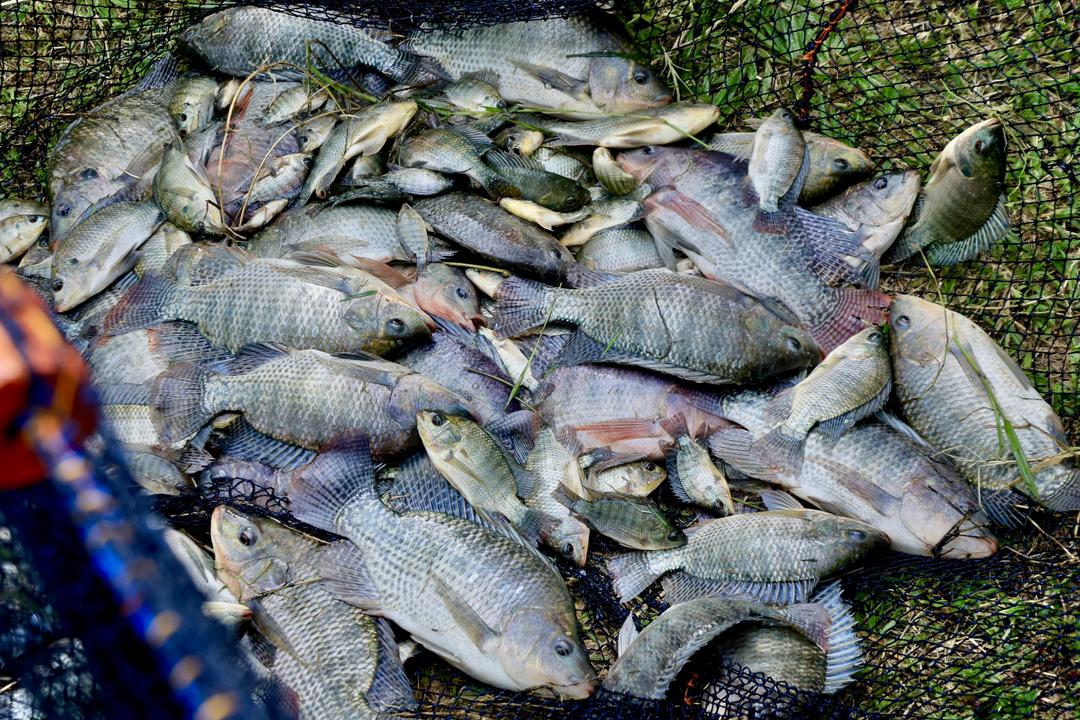
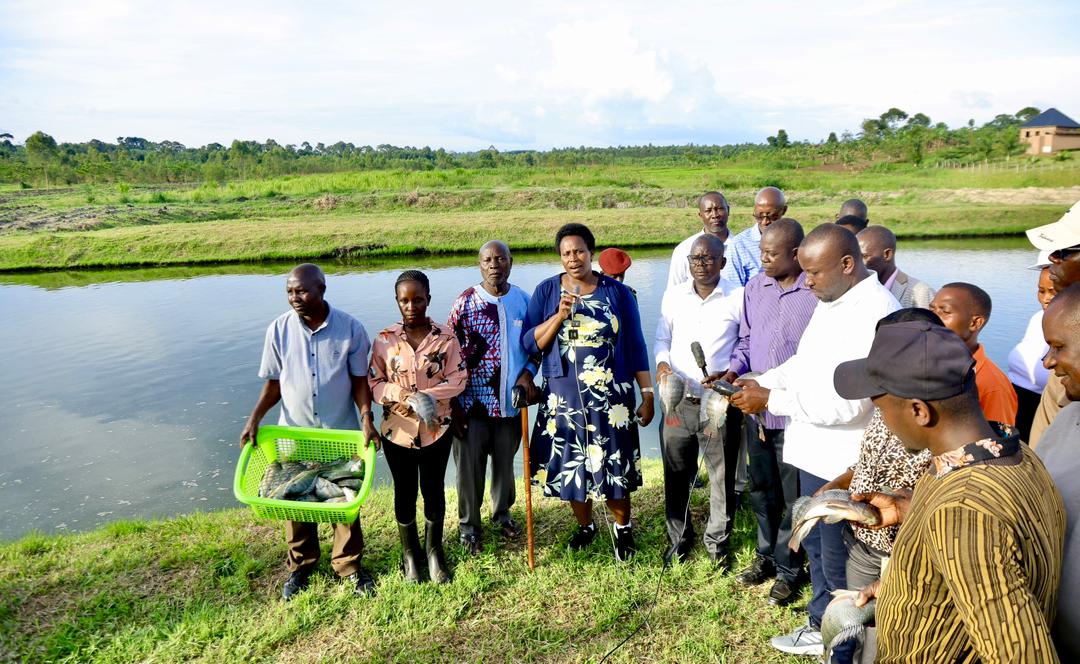
State House Uganda Comptroller Jane Barekye has officially launched the first fish harvest from the Presidential Demo Fish Farms, signalling early success in a government programme aimed at promoting sustainable livelihoods and environmental conservation.
The flagship initiative is part of a broader strategy championed by Yoweri Museveni to transition communities away from rice cultivation in wetlands—an activity often linked to environmental degradation—towards fish farming, which is considered more sustainable and economically rewarding.
The demonstration farms, established across different regions, are designed as practical training centres where farmers can acquire aquaculture skills.
After a farming cycle of between four and eight months, the fish have now matured, providing proof of concept for communities being encouraged to adopt the model.
Launching the harvest at the Presidential Industrial Hub in Kayunga, Barekye said the government is committed to expanding the programme, with a focus on communities living near wetlands.
“At the Mengo Presidential Industrial Hub, we have several enterprises, including fish ponds. Because this is a swampy area, we wanted to demonstrate how communities can utilize such land productively without degrading the environment,” she said.
She added that the harvest represents both a learning milestone and a commercial opportunity.
“We decided to sell the fish we have been rearing, which is why we are here today. Out of the three ponds at this site, two are ready for harvest. This model presents a compelling economic case, especially for people in wetland areas who may otherwise engage in low-return activities,” Barekye noted.
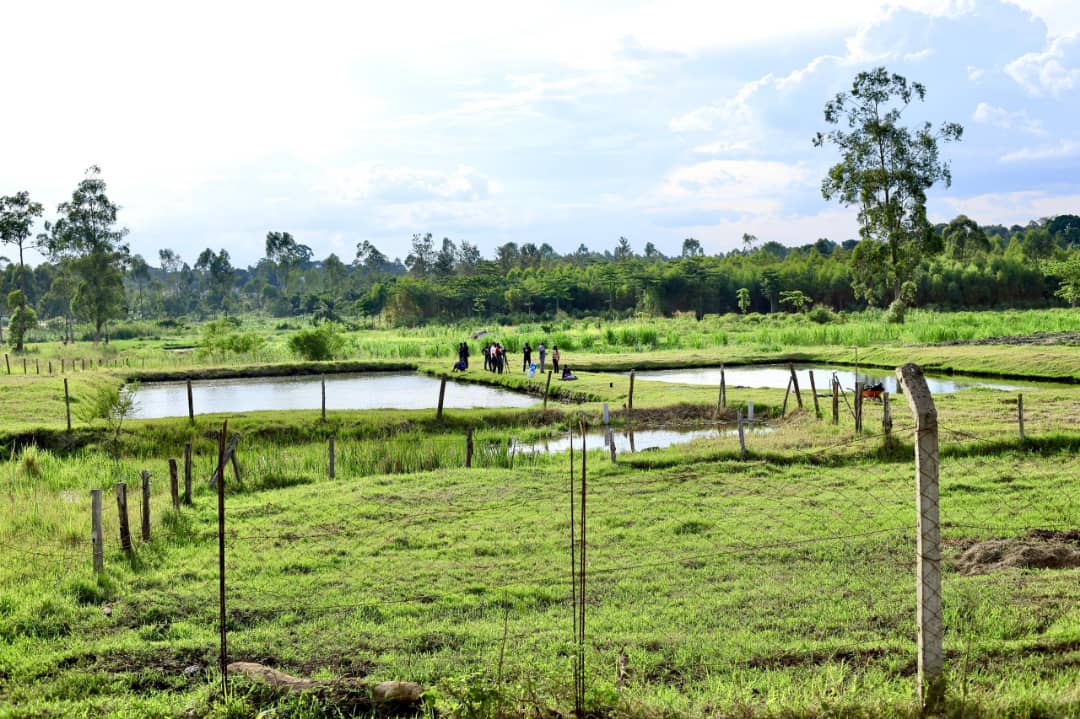
Morrish Ochen, Commissioner for Technology Transfer at State House, said the hubs are intended to serve as practical learning centres while also reducing pressure on wetlands.
“At the Kayunga Presidential Industrial Hub, we are showcasing different enterprises. The goal is to encourage people to adopt commercial agriculture that can be practiced on small pieces of land but generate higher income,” he said.
Ochen highlighted fish farming as a particularly promising venture due to its environmental benefits and strong market demand.
“We are rearing tilapia here because of the ready market. Fish farming not only preserves the environment but also offers high returns to farmers,” he added.
He, however, acknowledged that aquaculture requires significant upfront investment, particularly in pond construction and management, revealing that government is working on mechanisms to support farmers.
“Fish farming can be costly at the start, especially when it comes to excavating ponds. That is why the President is keen on supporting farmers with the necessary resources. We are currently working on modalities to assist community members, particularly with equipment for pond development,” he said.
Ochen further revealed that demand is already high, with buyers from the Democratic Republic of Congo and border towns such as Busia placing advance orders.
Raymond Kamugisha encouraged the public, especially the youth, to take advantage of the demonstration farms as open learning centres.
“These hubs are public facilities. Community members should feel free to visit, interact with managers, and acquire knowledge. Young people, in particular, should come and learn practical skills that can transform their livelihoods,” Kamugisha said.
At the Mengo Zonal Presidential Industrial Hub, farm manager Viola Namanda explained that each pond—measuring about 1,000 square metres—was stocked with approximately 6,000 tilapia fingerlings in November last year.
She noted that mature fish can fetch around Shs8,000 each, making the venture commercially viable.
The Presidential Demo Farm Programme is expected to boost household incomes while contributing to environmental conservation by reducing encroachment on fragile wetland ecosystems.
Officials believe that with sustained government support and growing market demand, fish farming could become a cornerstone of Uganda’s rural economic transformation.
